Free Shipping:Orders $99 and Up
Michael Walker’s Hidden Gem: The Walker Blade Lock
By Kevin Wells
From his pioneering mechanical designs to his iconic aesthetic style, it would be hard to overstate just how big of an impact Michael Walker has had on the modern knife world. But with his Liner Lock – and the detent ball, ramped lock face, and one-hand operation that came with it – making such an enormous impact, it’s easy for some of his lesser-known inventions to get overshadowed. Luckily, last year one of his most unique inventions received a modern revival, and now the CRKT Walker Blade Lock is launching in a brand new colorway.
In the late 1970s, when Michael Walker was still working as a jeweler in Taos, New Mexico, the knife landscape looked very different than it does today. While many talented knife makers were pioneering the way in concepts like blade design, handle construction, cutting profiles, and steel heat treat, there was dramatically less variety in terms of how knives actually worked – how they moved and opened, how you operated them, and certainly how they locked.
There had already been hundreds of obscure lock designs for knives in the preceding centuries, some patented, some even experiencing moderate success in the marketplace. In global markets, the ratcheting pick-lock found on Spanish navajas, or the pin-based lever locks found on German and Italian autos had proven both popular and effective for decades. But both in the US and abroad, the overwhelming majority of knives fell into two camps: non-locking slipjoints and lockbacks. The vast majority of everyday customers had never even heard of anything else. But in the clever, mechanically scrutinizing eyes of Michael Walker, this left a lot to be desired.

Michael Walker beside one of his sculptures
Michael set out to design not just a new lock mechanism, but a totally new way of interacting with a pocket knife. He wanted something reliable, rigid, and one-hand openable. That last part was a surprisingly uncommon concept in knives of the day. Loosely inspired by William Watson’s 1906 leafspring-based design sometimes found on early electrician’s knives, Michael set about inventing what he would later name the Liner Lock.
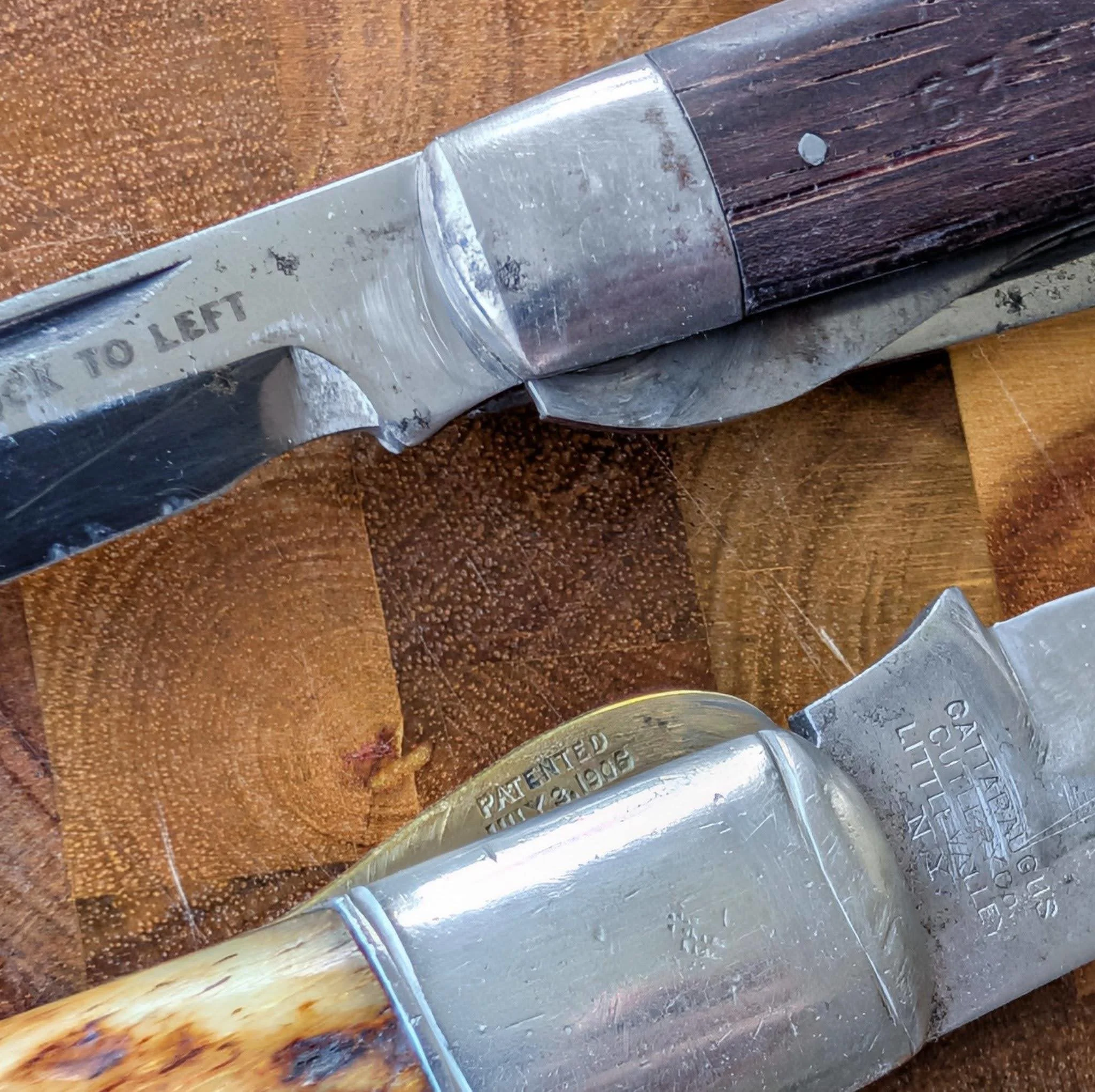
William Watson style leaf spring liner
First and most importantly, Michael repositioned how and where the leaf spring interfaces with the blade, converting what was once a weak flexural force into a dramatically stronger compressional force. Next, Michael introduced a ramped lockface to the blade tang where it engaged with the leafspring, eliminating the wobbly interface of nearly all previous lock designs. These two innovations shaped the future of nearly every lock design that has come since.
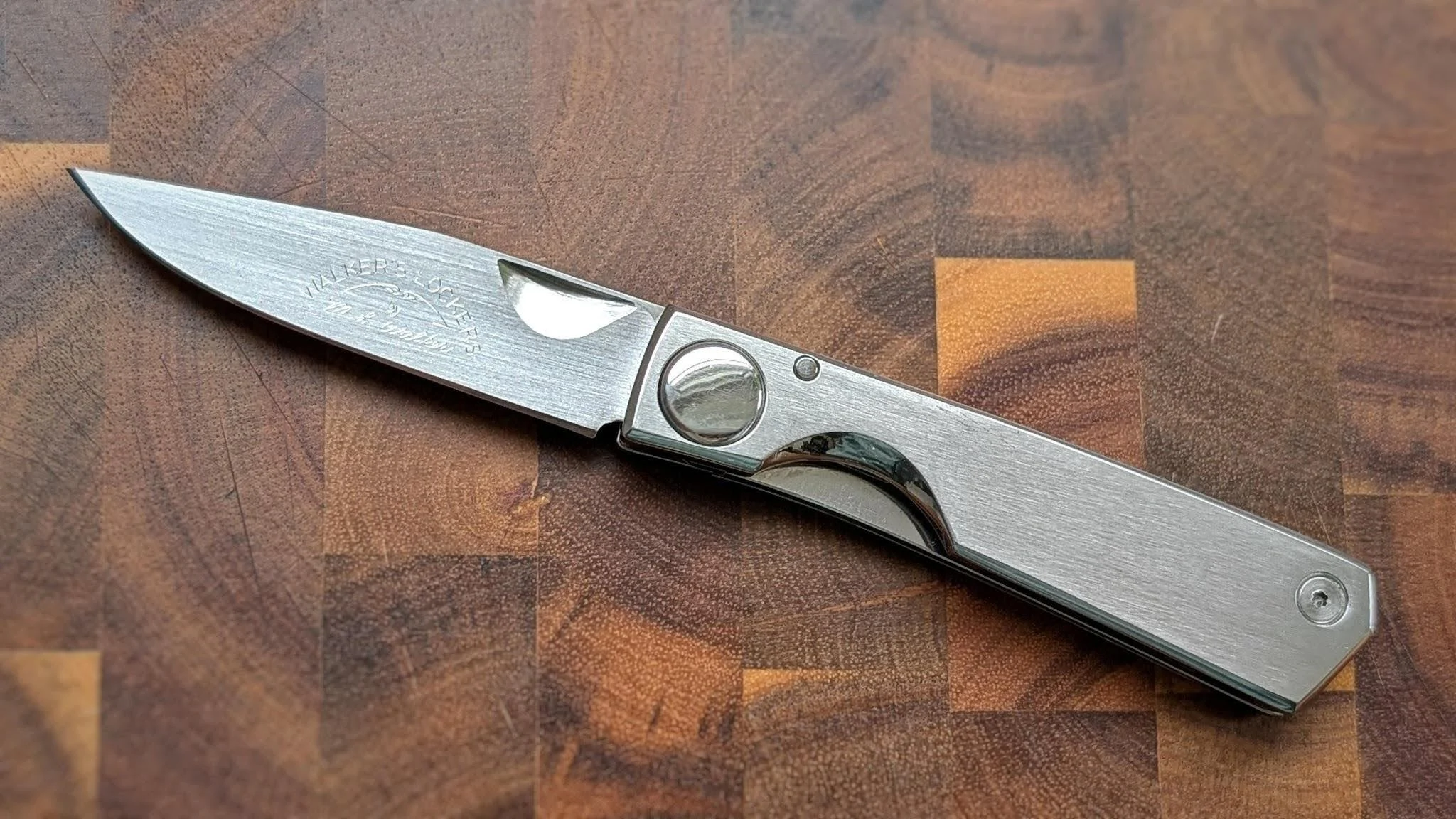
Custom Walker’s Lockers Liner Lock circa 1982
But to make it one-hand-openable, Michael had to do away with the heavily-sprung, slipjoint style backspring found on the original design. This led to the introduction of a stop pin at the front to rigidly blockade the blade, and eventually to the introduction of the first ever detent ball to securely hold the blade closed and reduce friction while opening.
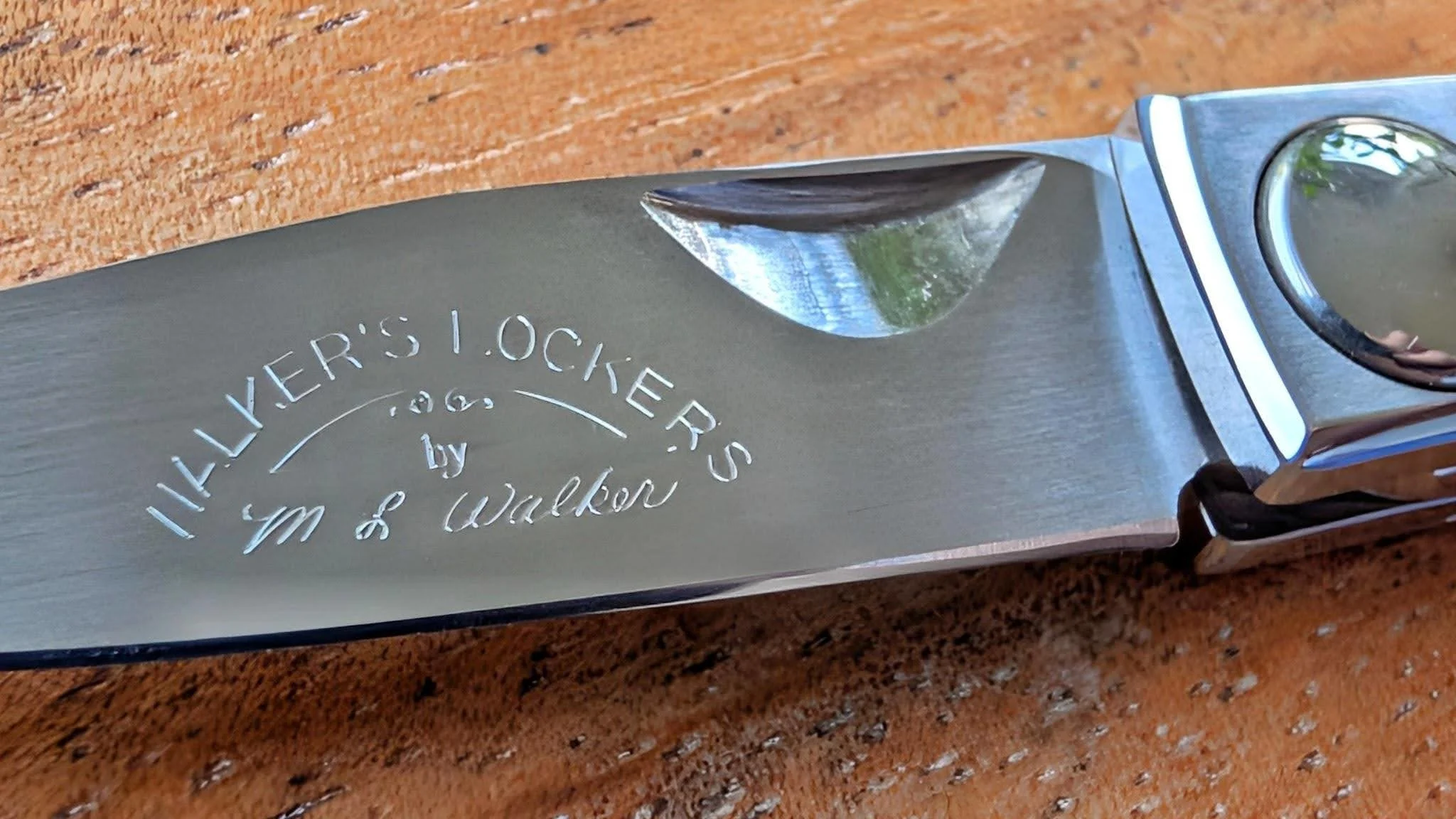
Custom Walker’s Lockers Liner Lock thumb groove for opening
Rather than nail nicks, Michael’s earliest Liner Locks often had large notches ground into the blade by hand with a rotary tool, allowing you to push the blade open with your thumb. But by the late 1980s, Michael began experimenting with installing protruding studs mounted directly onto the blade. This was pioneering work. While obscure thumbstud-like designs existed as far back as the 1880s, the notion of attaching a stud to your folder only began to enter the mainstream consciousness in the late 1970s with the introduction of products like the Flicket or One-Armed-Bandit – small metal knobs you could attach to the spine of a folding knife to assist with opening.
But Michael Walker approaches every new design decision with careful scrutiny. He noticed that to operate a thumb stud, the user ends up pushing a significant portion of their force down into the stud to keep their thumb in place atop it. He realized that if he instead attached the stud to a small rocker bar mounted like a seesaw, pushing down on the stud could rock up the other side. He wondered: Could this be the basis of its own lock mechanism?
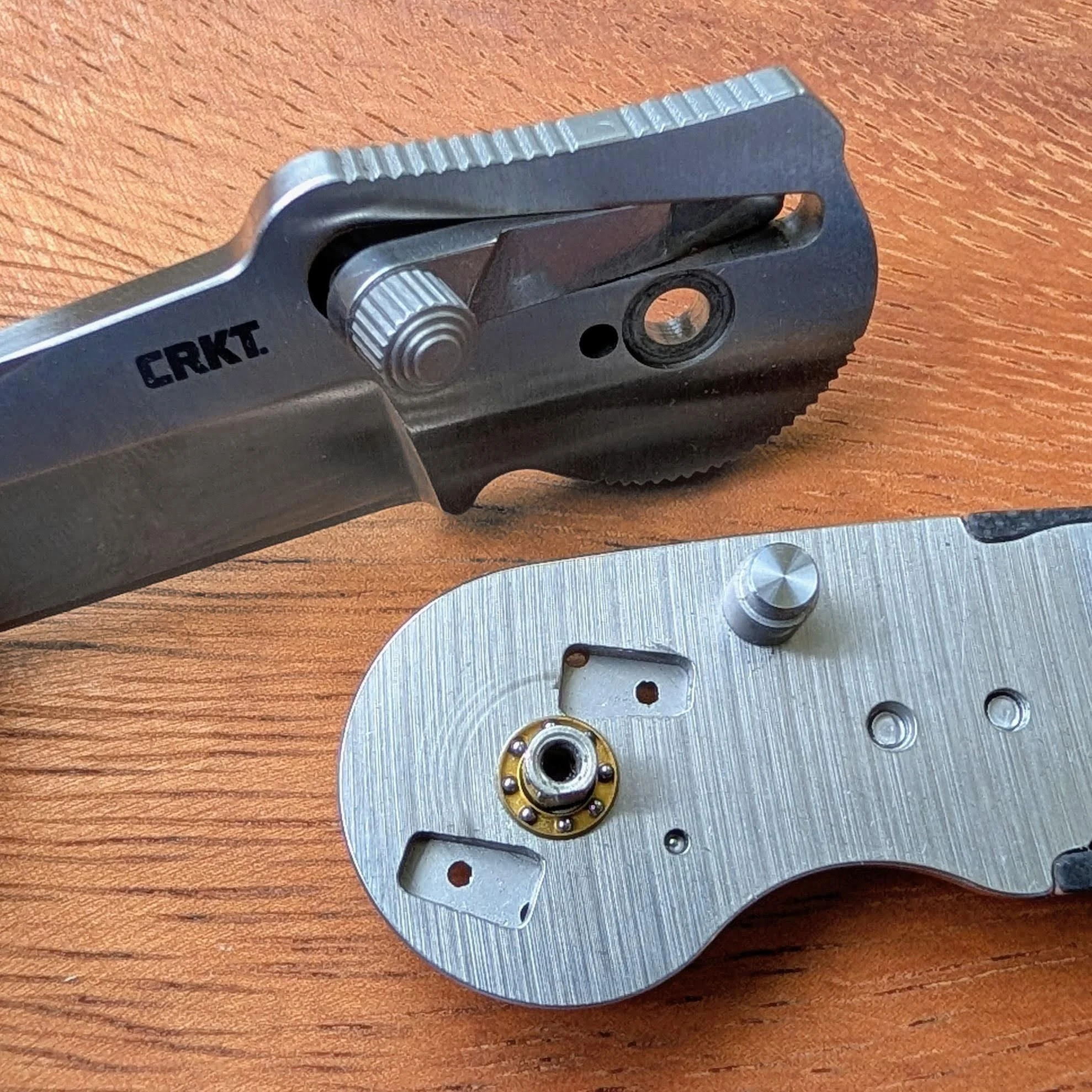
The internal workings of the Walker Blade Lock mechanism
Having already proven that a ramped lock face held securely under spring tension could be the basis of a rigid lock without any wobble or play, Michael ground a ramped wedge into the end of the thumbstud’s rocker bar. He added two slots to the frame of the handle corresponding to the two positions the rocker could fall into when open or closed. And just like that, the Walker Blade Lock was born.
By the Spring of 1990, Michael had finished his prototyping and successfully filed a patent for his new lock mechanism. While a typical Utility Patent often took up to 4 years or more to process as the USPTO riffled through prior art and squabbled with patent lawyers, Michael’s patent was granted a mere 9 months later. This speaks to just how clearly unprecedented his design was. No one had ever done anything like this before.
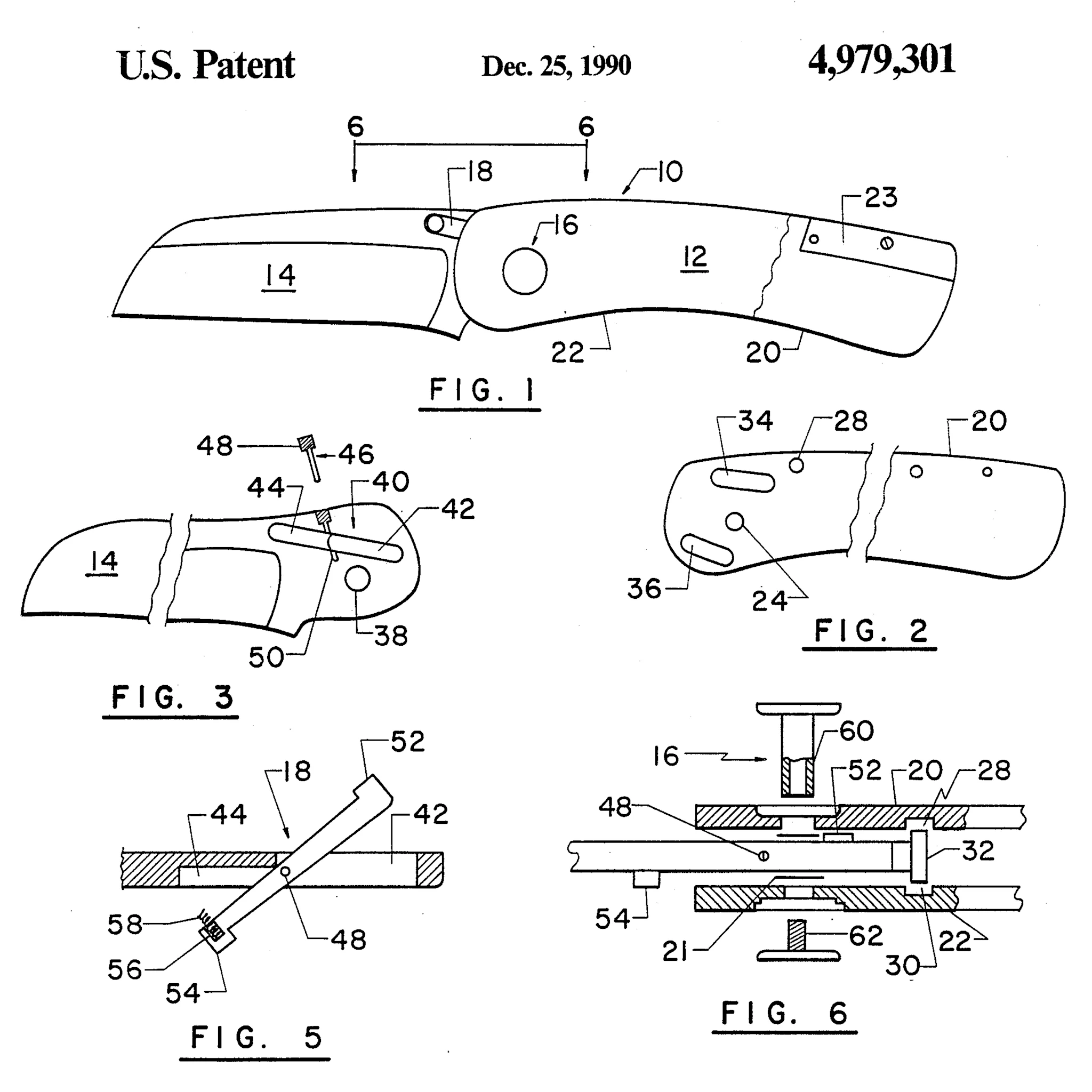
Patent US4979301 - December 25, 1990 - Michael L. Walker
That patent meant that, unlike his Liner Lock, companies the world over weren’t able to make their own versions of his design. But the mechanism itself was also ambitious enough that who would have even tried? It would be another four years before CRKT® was even founded, after all.
Michael continued featuring his Walker Blade Lock mechanism on handmade custom knives throughout the 90s, and it soon became a fan favorite amongst his customers. But due to the extremely high cost and scarcity of these one-of-a-kind art pieces, few people were able to experience the genuine benefits of his novel design.
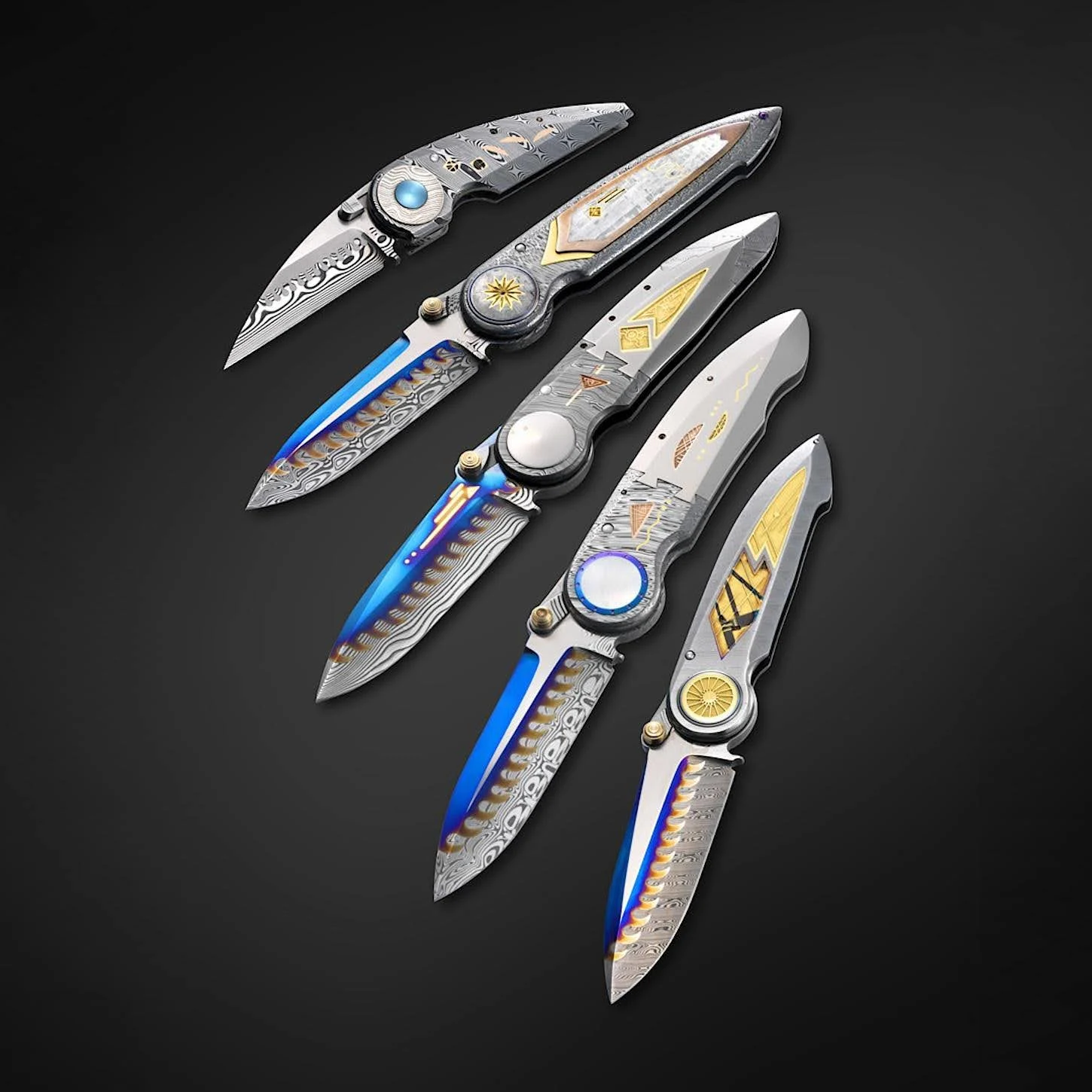
Michael Walker - Custom Walker Blade Locks - Photo: Dr. David Darom
The nature of the Walker Blade Lock design means that it fully locks in both the open and closed positions, providing an added layer of security compared to his earlier detent ball approach. The intuitive motion of pressing down on the stud made opening and closing the blade both effortless and foolproof, while the robust locking bar yielded an incredibly strong and reliable lock. He knew this design needed to see much wider distribution through a production partner.
Michael wanted to bring his design to the masses, but as he put it, “no major knife manufacturer was then capable of putting the Walker Blade Lock into production because of the challenging machining and close tolerances required.” That is, of course, until he met Columbia River Knife & Tool®.
By 2001, CRKT® had already made a name for itself with innovative, industry-changing designs like Ed Halligan’s ultra-minimalist K.I.S.S.™, or Kit Karson’s genre-defining M16®. Finally there was a knife manufacturer ambitious and daring enough to take on Michael’s Walker Blade Lock design.
The initial production version, stylized as the BladeLOCK™ model, debuted at SHOT Show in February of 2001, featuring 3.44” AUS 6M blades in both serrated and plain-edge configurations, and lightweight Zytel™ handle scales atop a stainless steel frame. In addition to Michael’s new lock, the knife featured many elements of his iconic style, from his prominent pivot collars to his swooping lines and trademark ergonomics.
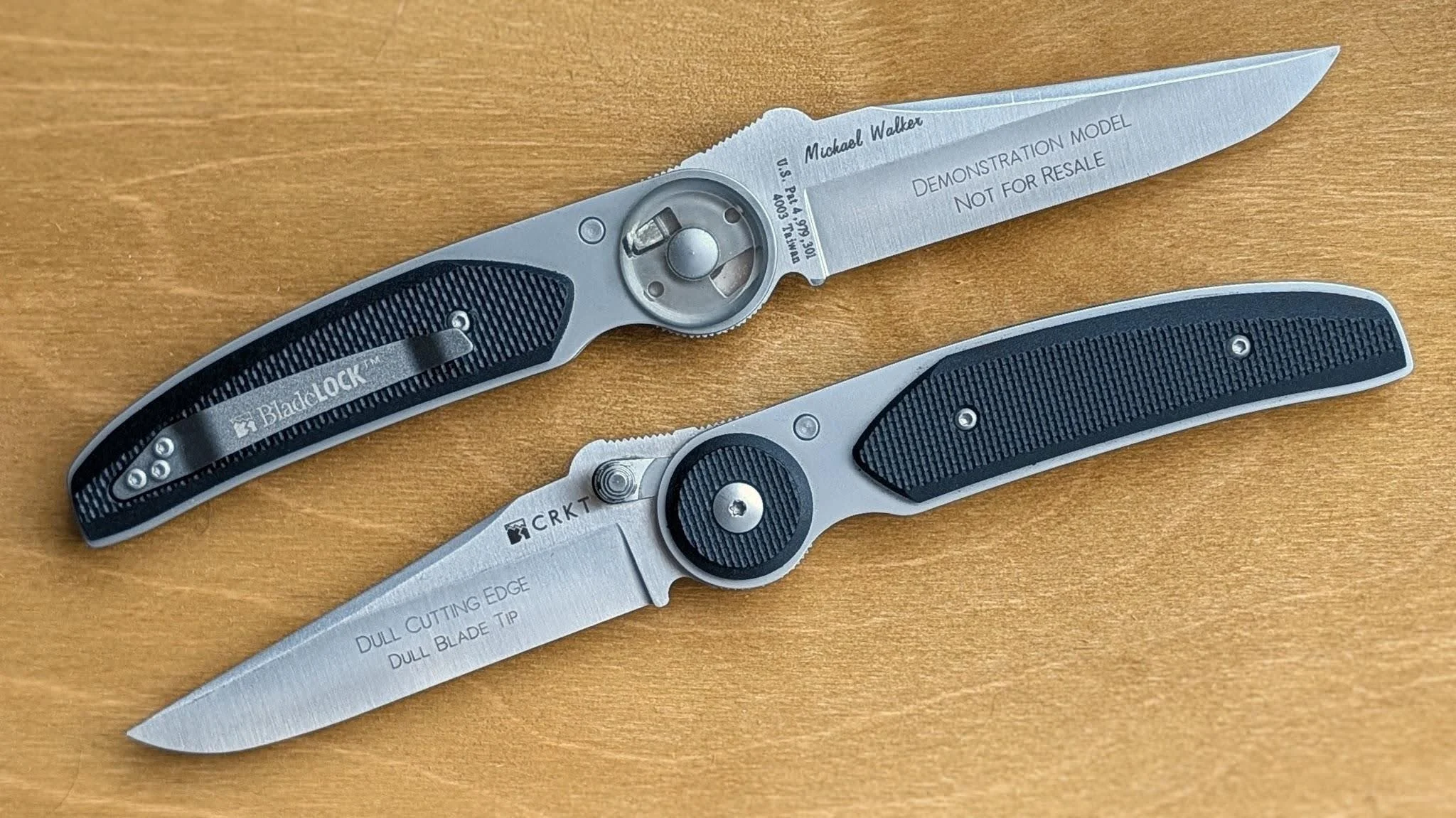
Demonstration models of the original BladeLOCK™ circa 2001
This lock was unlike anything customers had ever seen, so to help illustrate how it functioned and its internal structure, CRKT® shipped unsharpened demonstrator models to major retailers, featuring a clear polycarbonate back plate, letting you see the locking lug snap into place as the blade was opened and closed.
After the success of the initial BladeLOCK™ model, Michael Walker and CRKT® doubled down with a new iteration released exactly two years later, in February of 2003: the BladeLOCK 2™. This smaller sequel featured a low-tipped sheepsfoot blade shape that had become iconic on Michael’s custom knives, measuring in at a more pocketable 2.93”.
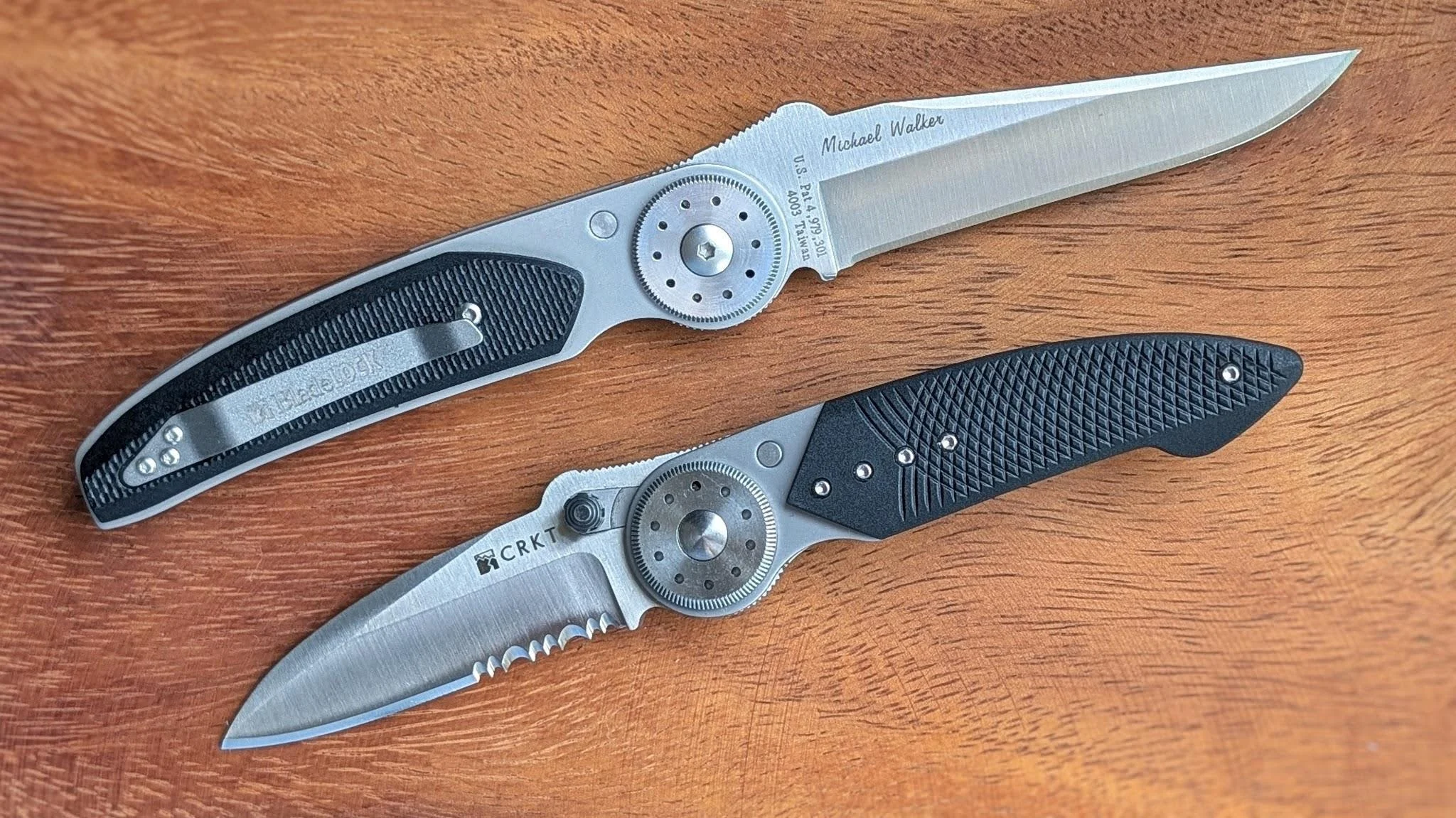
The original BladeLOCK™ and BladeLOCK 2™ circa 2003
In January 2025, nearly 25 years to the day since its original debut, Michael Walker’s ingenious mechanism was reintroduced with the launch of the CRKT® Walker Blade Lock, an updated and modernized rendition of the smaller sheepsfoot model. While the overall shape and lock function remained nearly identical to its predecessor, all of the materials and manufacturing techniques were upgraded to reflect CRKT®’s decades of manufacturing expertise.
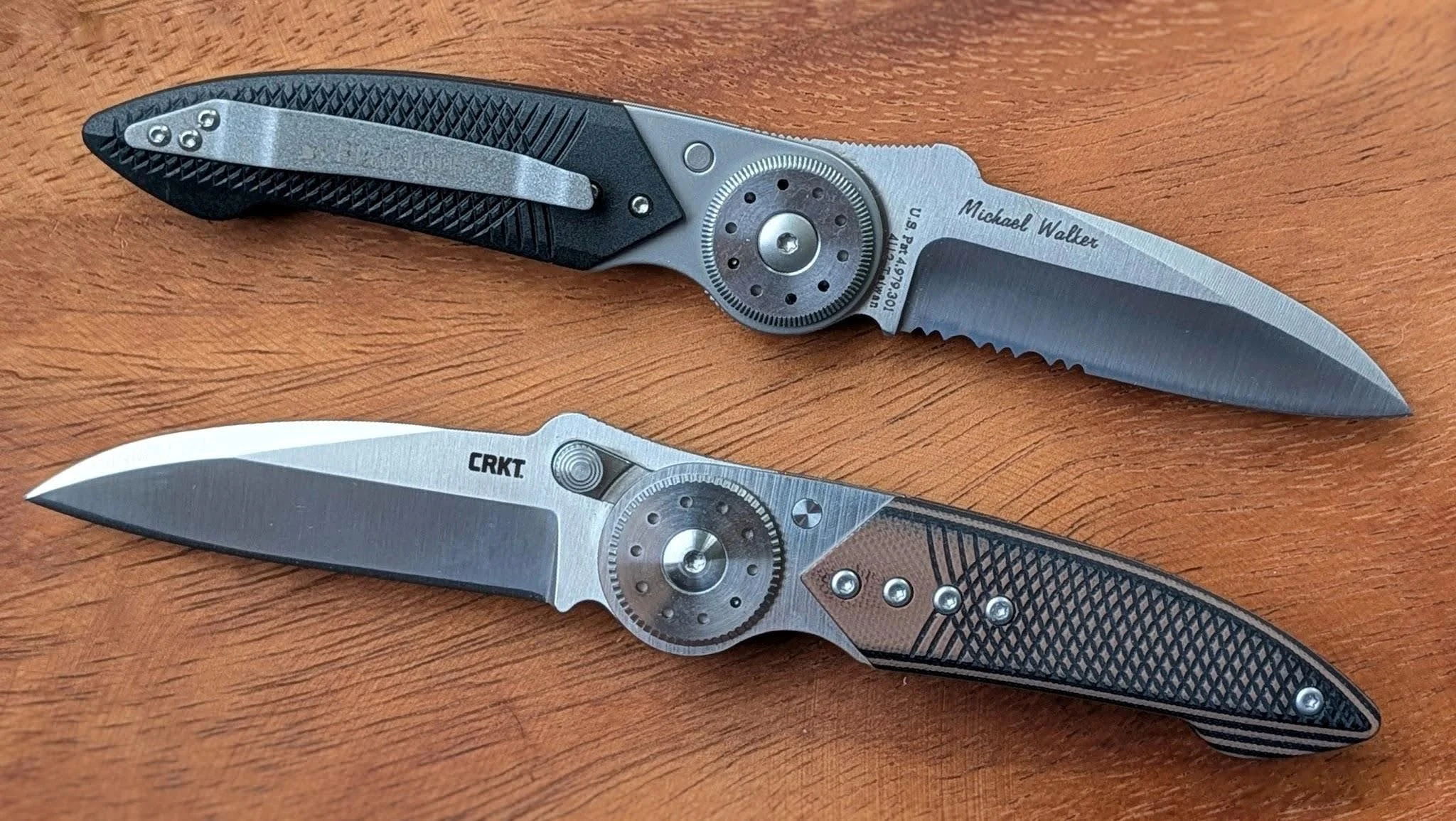
The original BladeLOCK 2™ circa 2003 next to the Walker Blade Lock circa 2025
The Zytel™ handle slabs were replaced with a more rugged, two-tone G10 material. The alternating layers of color emphasize the grippy milled texture, a perfect example of how Michael Walker marries mesmerizing, cascading form with purpose-built function. And internally, this latest generation has been fitted with IKBS™ caged ball bearings, making opening and closing smooth and reliable.
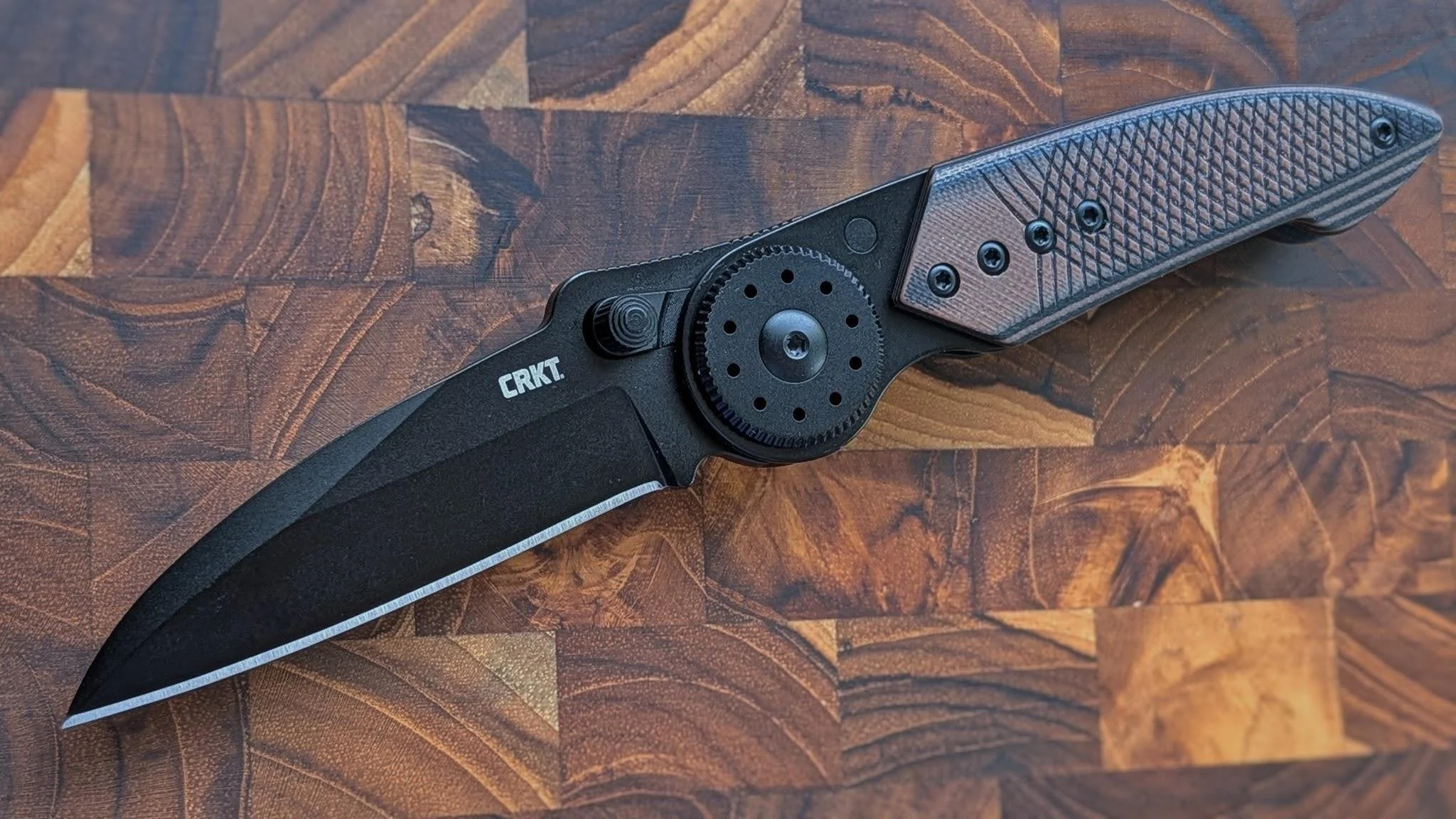
And now, the Walker Blade Lock is launching in an all-new colorway, with a black titanium nitride finish that really pops!
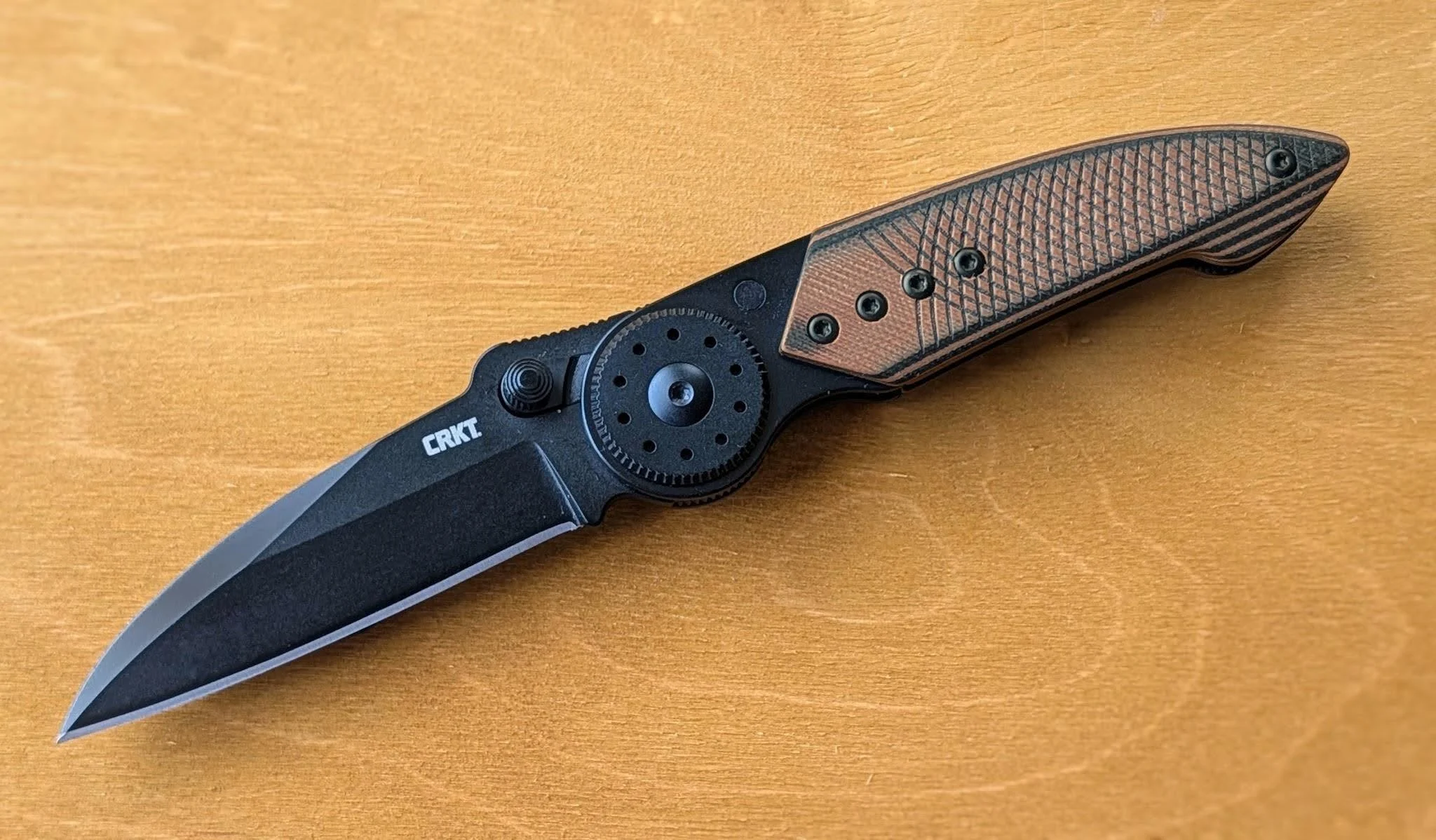
The latest Walker Blade Lock colorway with Titanium Nitride finish
After more than two decades since its initial debut, the Walker Blade Lock truly stands out in an often monotonous sea of modern knives. In partnering with CRKT®, Michael’s challenging design was finally matched with the kind of pioneering and ambitious manufacturing required to bring it to fruition. While the Walker Blade Lock may not be Michael Walker's most famous invention, its intuitive, strong, and secure lock design makes it a hidden gem worthy of the spotlight.
Kevin Wells
Kevin Wells is the creator of Knife Nerdery, a YouTube channel driven by a simple question: how does that work? With an eye for engineering and design, he takes a close look at the mechanisms that make knives distinctive. Kevin also brings a deep knowledge of knife history to his videos, connecting today’s designs to the ideas and makers that came before them