Free Shipping:Orders $99 and Up
A Second Chance at Brilliance: Meet the Gravitic Flip™
Some ideas are just too cool to let them get lost to time.
By Kevin Wells
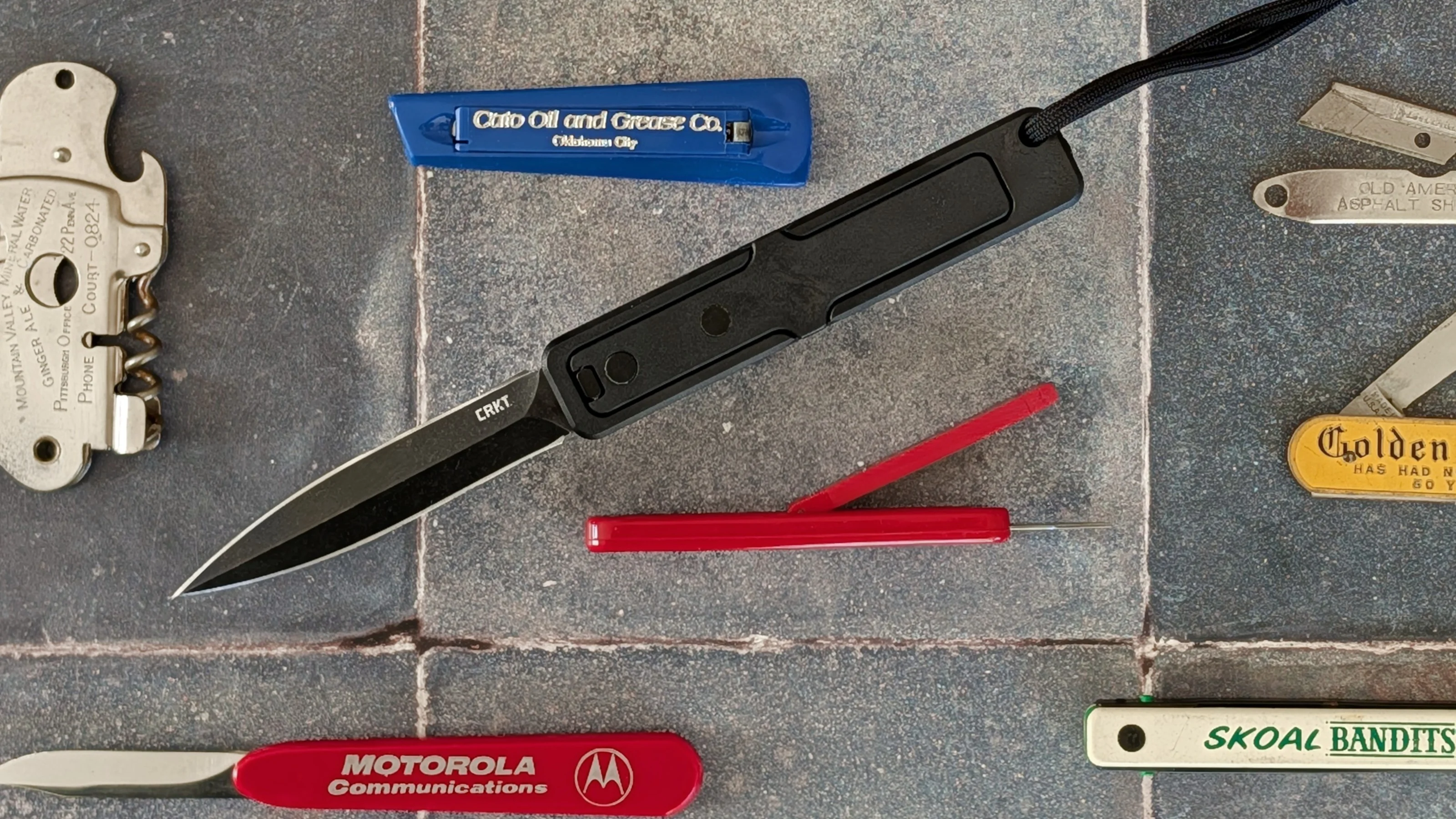
When Ted Valerio, founder of One Asterisk Industries, first came across an old, well-used knife with an odd opening mechanism in the bargain bin at a gun show, he was struck by its simplicity. He’d never seen anything like it, yet he immediately knew how it was operated. But as he slid the blade in and out, marveling at its design, he also immediately knew he could make it better. With some clever modernization and quality manufacturing, Ted knew he could make something really special. He knew he could lift this design up past its humble beginnings and give it a second chance at brilliance.
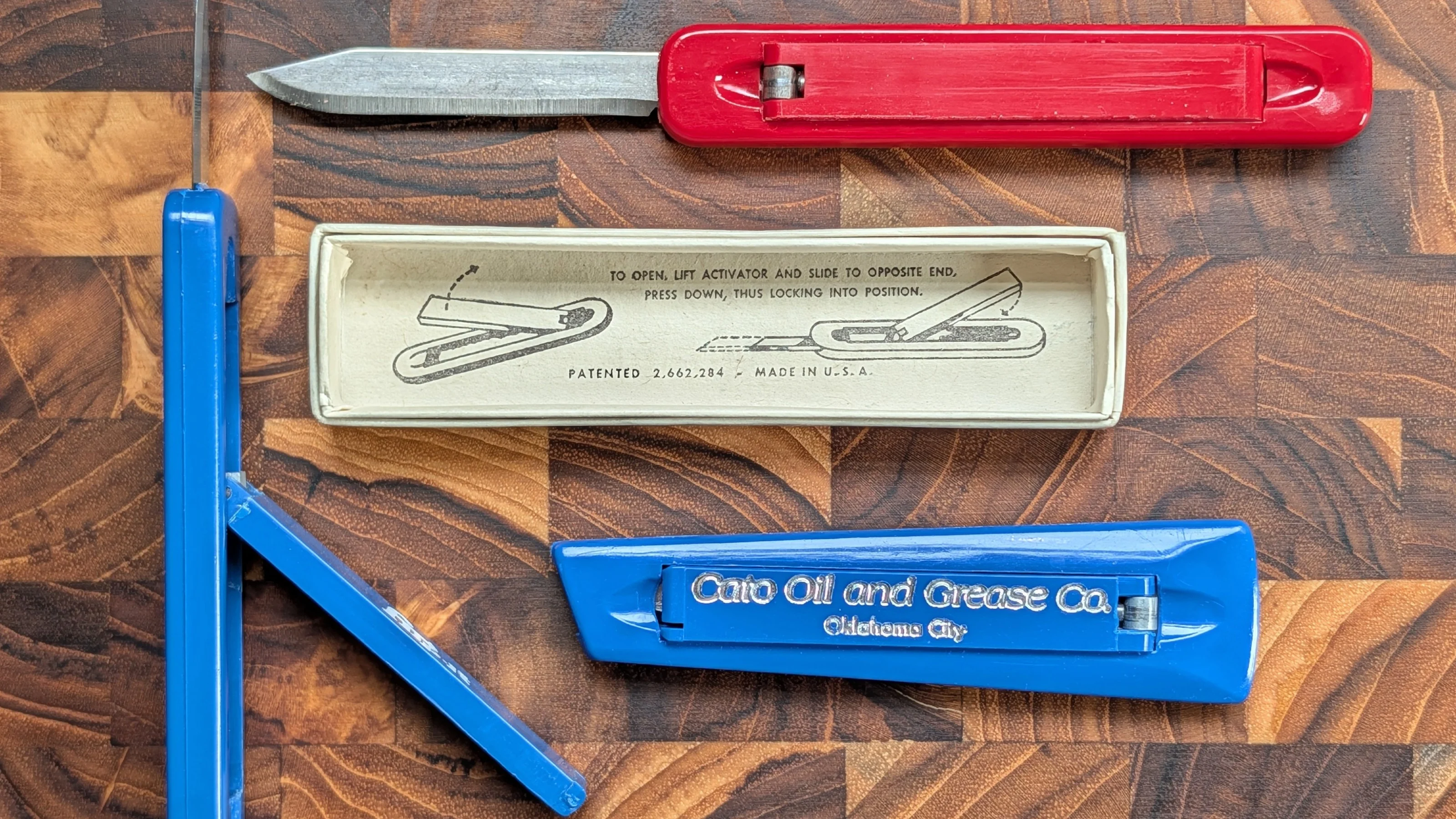
The knife Ted stumbled upon was an unassuming, plastic promotional item, long since forgotten by its original owner. Sprawled across its rectangular body was the name of some equally long-forgotten business that had once handed these knives out as tokens of appreciation to its customers.
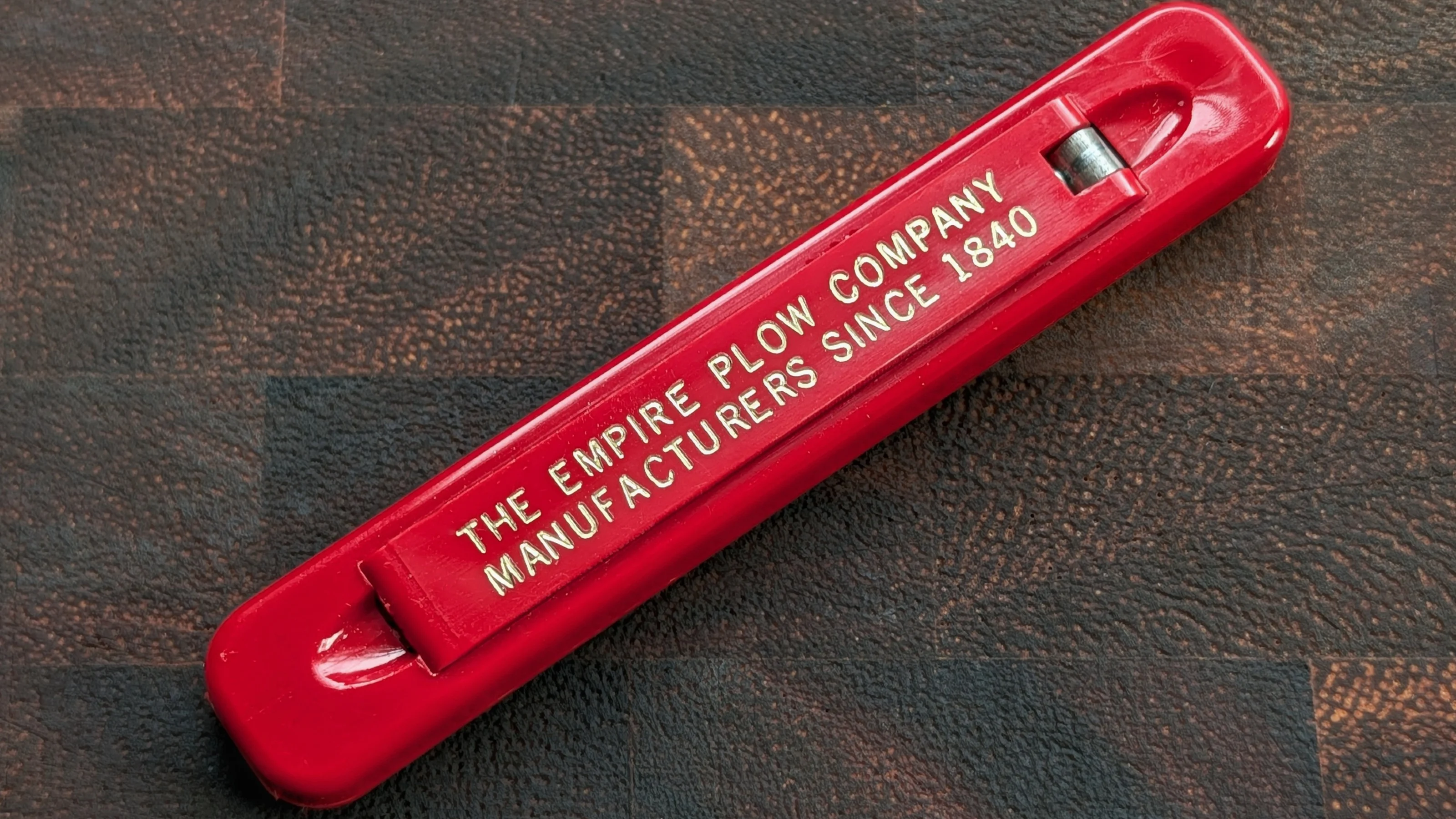
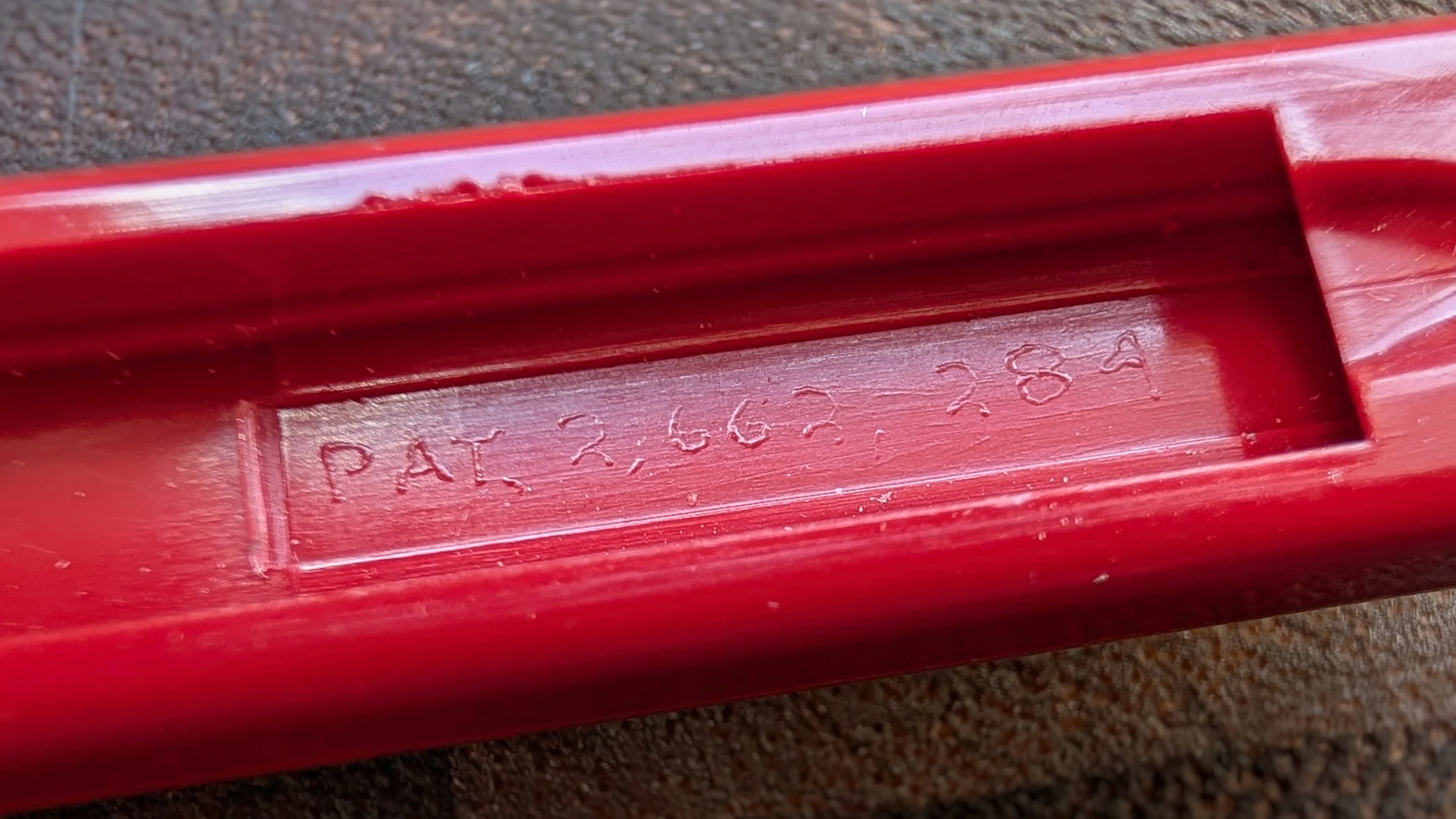
Totally enthralled by the design, Ted was determined to learn its origin. After hunting down numerous vintage examples, he finally found one containing the breakthrough he was looking for: a patent number, seemingly hand-engraved into the mold.
The knife was the brainchild of entrepreneur and inventor Philip Unsinger of Fremont, Ohio, who ran the Unsinger Razor Blade Co. alongside his father, Peter. Philip was endlessly creative, filing for his first patent in 1906 at the young age of 23, with nearly two dozen other patented inventions before his death in 1960. While the majority of his inventions dwelled in the land of razors, utility knives, and cutlery, his creativity knew no limits. That first patent? A propeller-driven, balloon-operated, flying car!
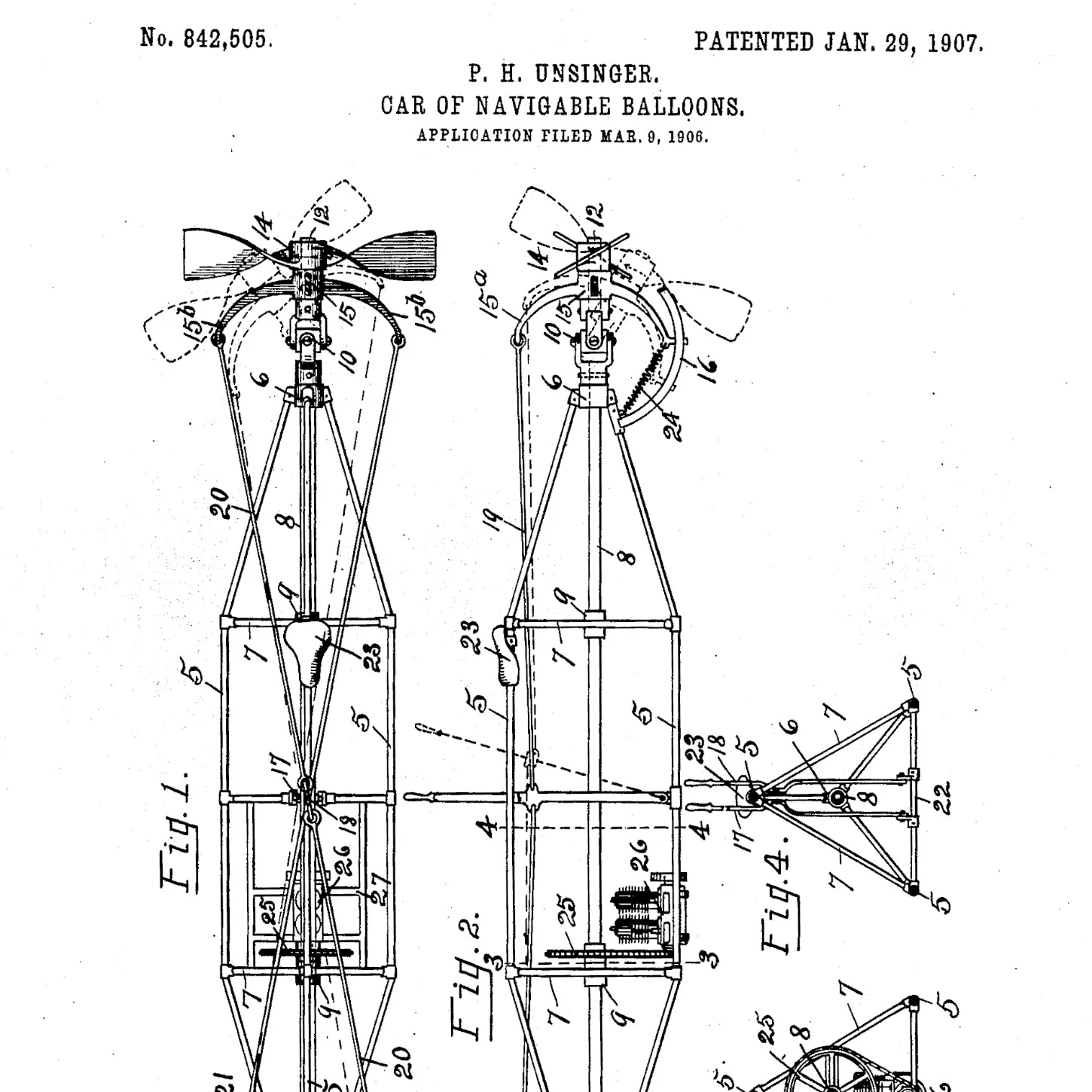
Patent US842505 - January 29, 1907 - Philip Unsinger
By the time Philip designed his slide-out knife in 1949, he had identified three main goals he needed to solve. He wanted a knife that could be safely operated without concern for accidental closing, a knife that was immediately intuitive to use, and a knife that could be cheaply mass produced of molded resin. In short, he wanted a knife you could hand to anybody. Or rather, he wanted a knife that companies would be willing to hand to anybody, for free, as a promotional item.
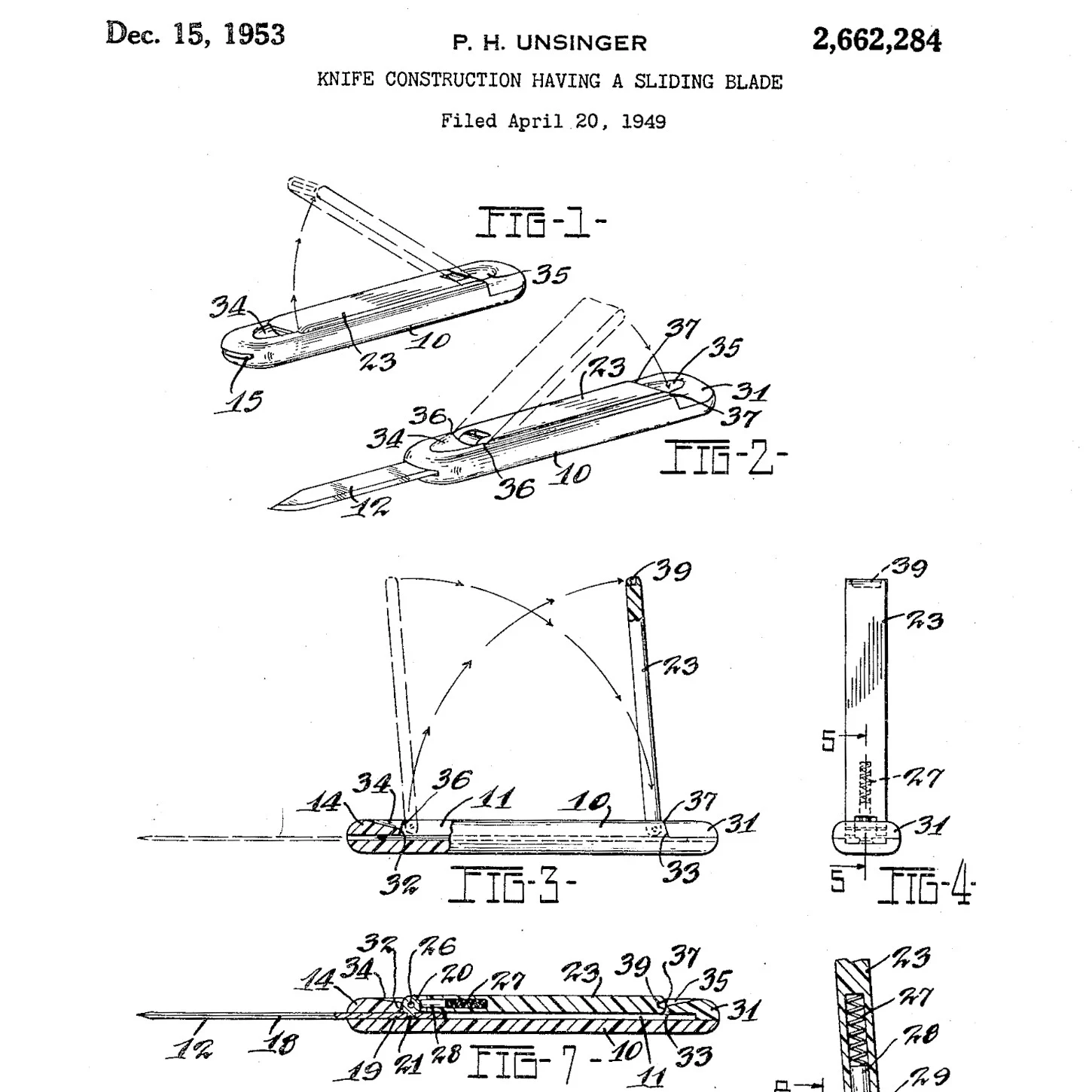
Patent US2662284 - December 15, 1953 - Philip Unsinger
At its core, his design was brilliantly simple, with only three main parts. It’s an OTF knife, but not an automatic. The blade is attached to one end of a flat bar that runs the length of the handle and nestles inside. To open the knife, you simply lift up on the bar, use it to slide the blade forward, and then lay the bar back down into the handle, now facing the other direction. It’s that simple. While in use, your grip holds the bar in place, preventing the knife from accidentally closing on you. And even if the bar somehow managed to work its way open, the blade would slide harmlessly back into its handle, at no risk to its user. The blades were made of thin, die-cut steel, something Philip was very familiar with in his razor business, and the handles were simple, molded plastic. Philip had accomplished all of his goals.
What Philip Unsinger didn’t know was that the benefits and safety of his flip bar design had occurred to someone else, too, 70 years earlier. All the way back in 1881, a man named August Rischow of Elizabeth, New Jersey invented what he called simply an “Improved Pocket-Knife.” His goal was to “prevent the blades of pocket-knives from folding or collapsing while the knife is being used,” and he knew that his invention made that nearly impossible. While August’s design shared Philip’s intuitive, secure flip bar, it lacked the simplicity and ease of manufacturing to catch on, and ultimately was lost to obscurity.
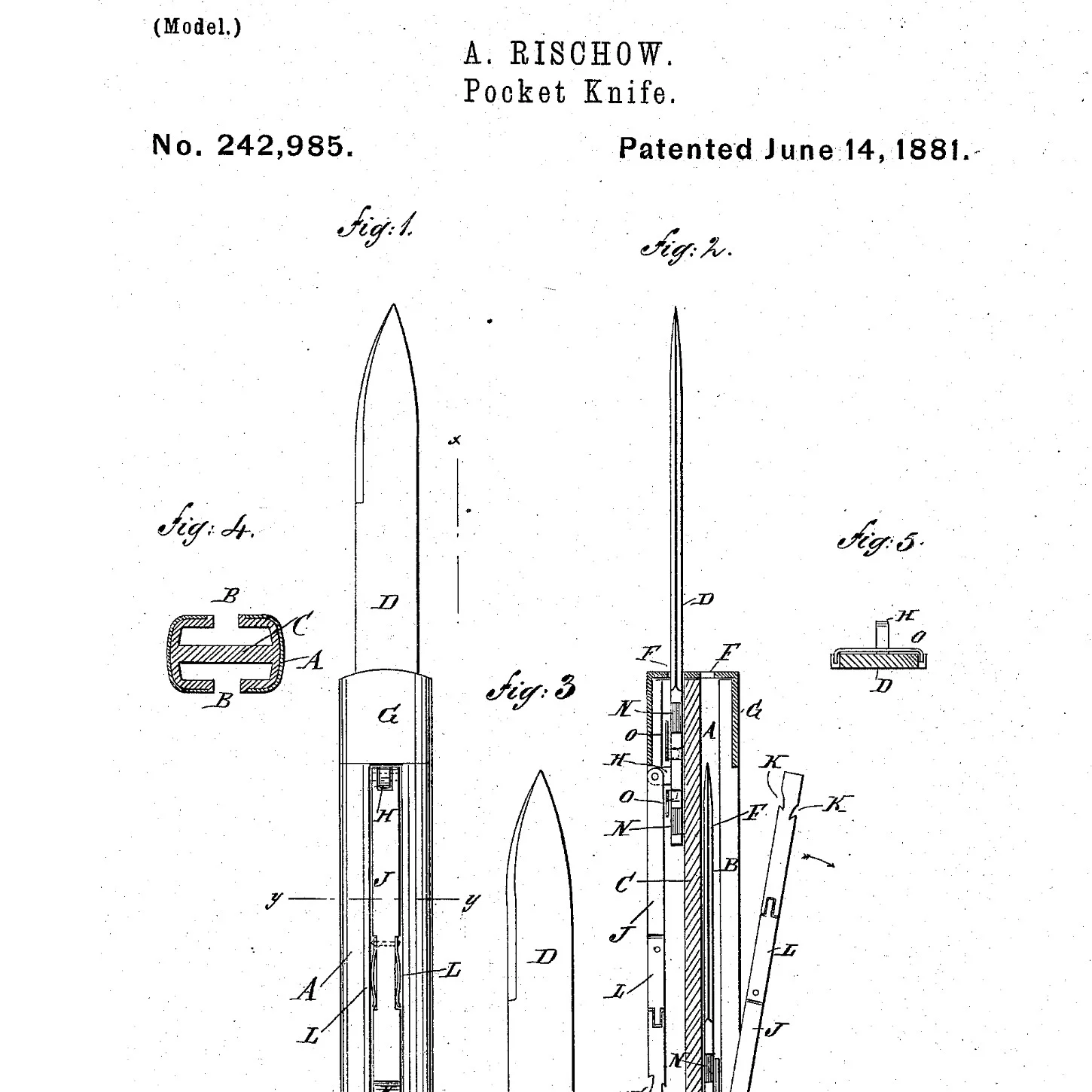
Patent US242985 - June 14, 1881 - August Rischow
Back in the 1950s, Philip Unsinger’s design was a success, and soon his knives were being handed out all across the country. They were inscribed with the names of automotive dealerships, industrial equipment suppliers, groceries, banks, and everything in between. They were made, eventually in the millions, all to be given away, used, thrown in a glove box or junk drawer, and ultimately forgotten. This was far too lowly a legacy for such a clever design!
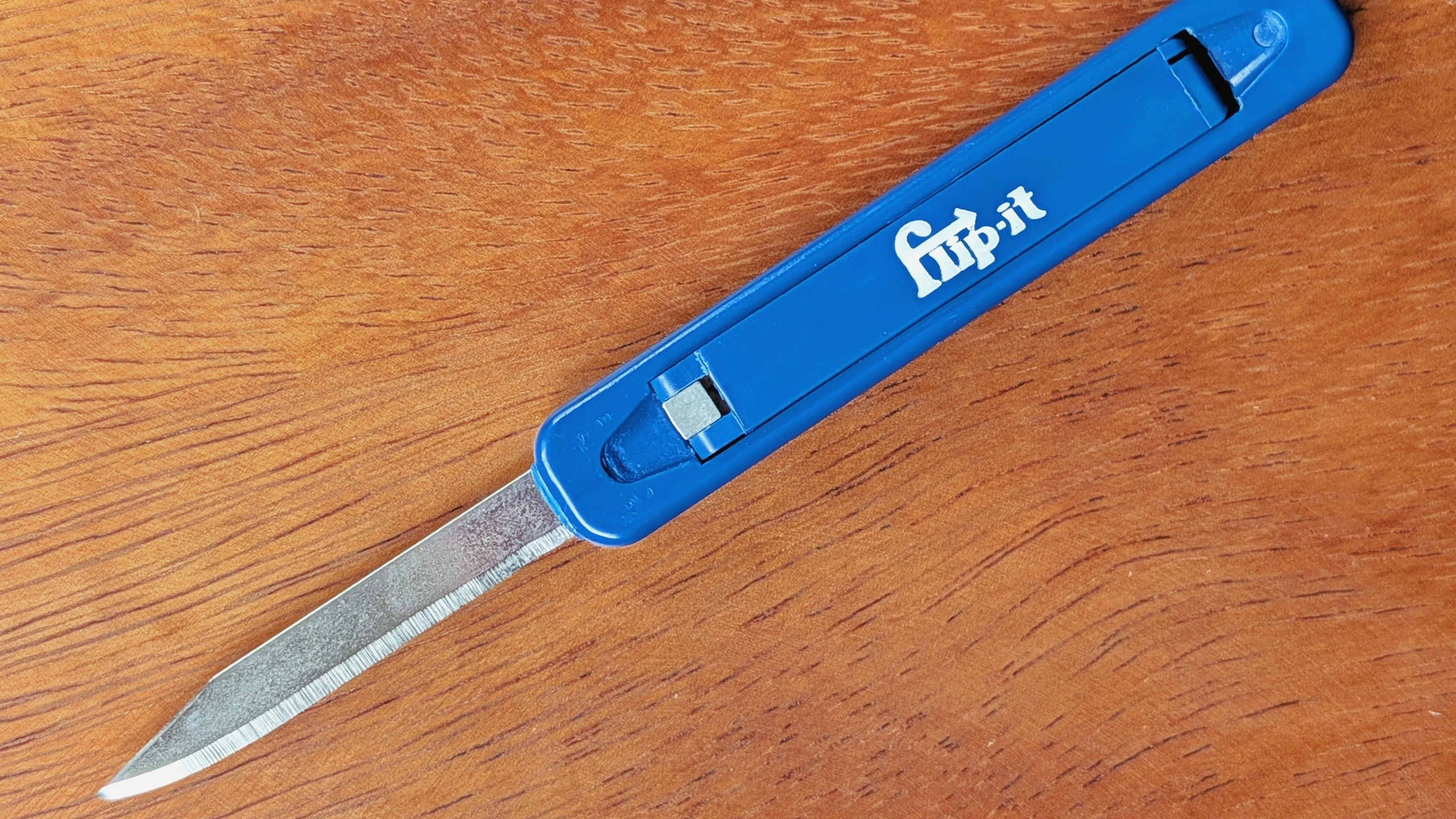
By the mid 1980s, long after Philip Unsinger’s death, his design got a brief second wind. Russell Manufacturing Co. of Georgetown, Kentucky began marketing the knife for the first time under its own brand name: Flip-It®. By this time, they had updated the design to make it even cheaper to produce: gone were the internal, spring-loaded friction bars and their cost-adding complexity, replaced by a simple notched nub that friction-wedged the bar into the handle. While the design finally had a brand identity, it had been pushed even further in a disposable direction. These were cheap, impulse buy knives you’d find in a jar at the checkout of the local hardware store. This, too, did not do this clever design justice!
With more than two decades in law enforcement, Ted Valerio is no stranger to the world of knives and tactical EDC. But he also is a designer, a tinkerer, and loves to stretch his mechanical mind. Modernizing this old design was a task right up his alley!
He wanted to make it smooth, one hand openable, and satisfying to operate. He also wanted to make it fast! Those decades in law enforcement had taught Ted the importance of speed under pressure, so he knew his version needed to slide out effortlessly with the flick of a wrist. With all of this in mind, Ted set about designing the Gravitic Flip™ (e.g. GRA-vi-tick).
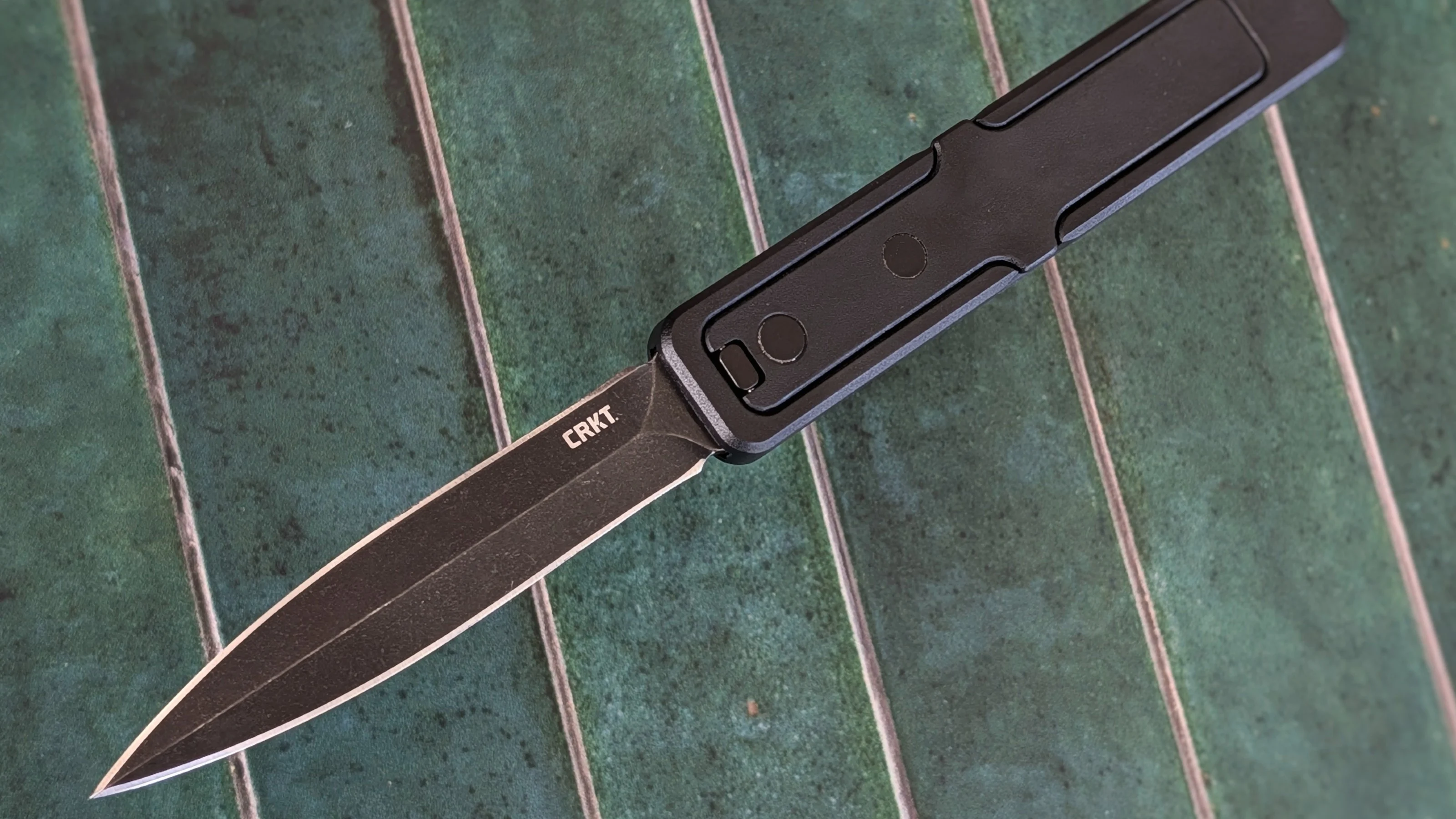
One of the first updates Ted made was to adjust how the blade is retained inside the handle. On the originals, the blade can simply lift up out of the channel and come completely out of the handle. This wasn’t a problem when everything was tight, slow, and two-hand operated, but that simply wouldn’t work for a fast, flippable version. Ted introduced two channels running along the sides of the knife, and extended the blade tang outward to ride inside them. The blade was now fully captured and could slide easily without any risk of falling out.
The original design’s basic friction wedge mechanism that held the flip bar in place also needed an update. It was slow, cumbersome, and required prying the bar out with your fingernail. Instead, Ted installed two magnets nestled into the flip bar. In the closed position, these magnets pull tightly against the blade, holding it securely in place. This has the added benefit of snapping the handle closed with a hearty, satisfying clack that feels as good as it sounds.
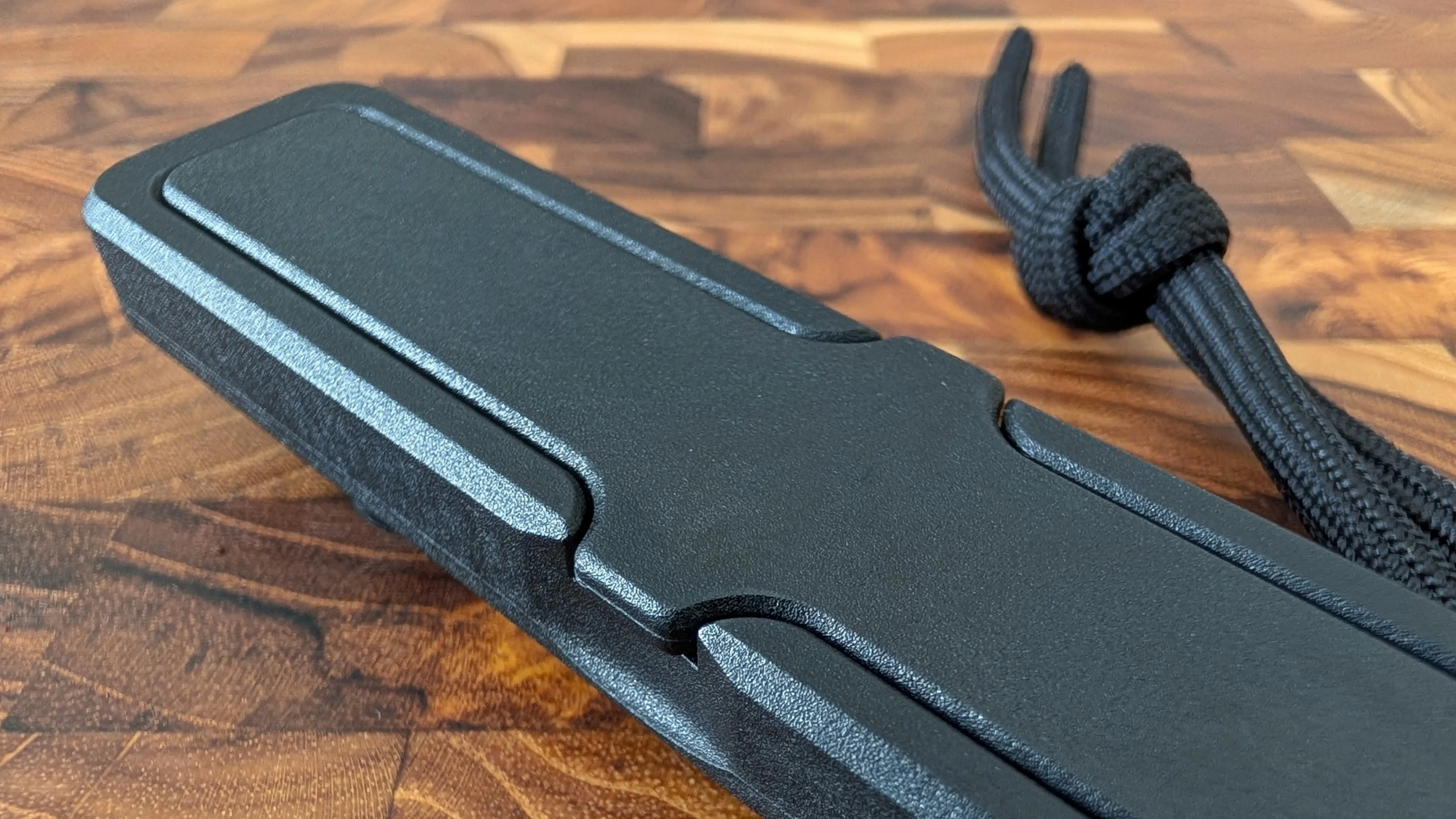
Next, Ted wanted the knife to be easily operated ambidextrously, so he added two wing-like tabs to the flip bar, with corresponding contours underneath in the handle. These make it simple and easy to flick the bar open, regardless of which hand you’re holding it in.
But now that the knife worked the way he wanted, the blade itself needed an update. It needed something slick, modern, and befitting its new speedy OTF deployment. It needed something fun. What could be better than a double-edged dagger!
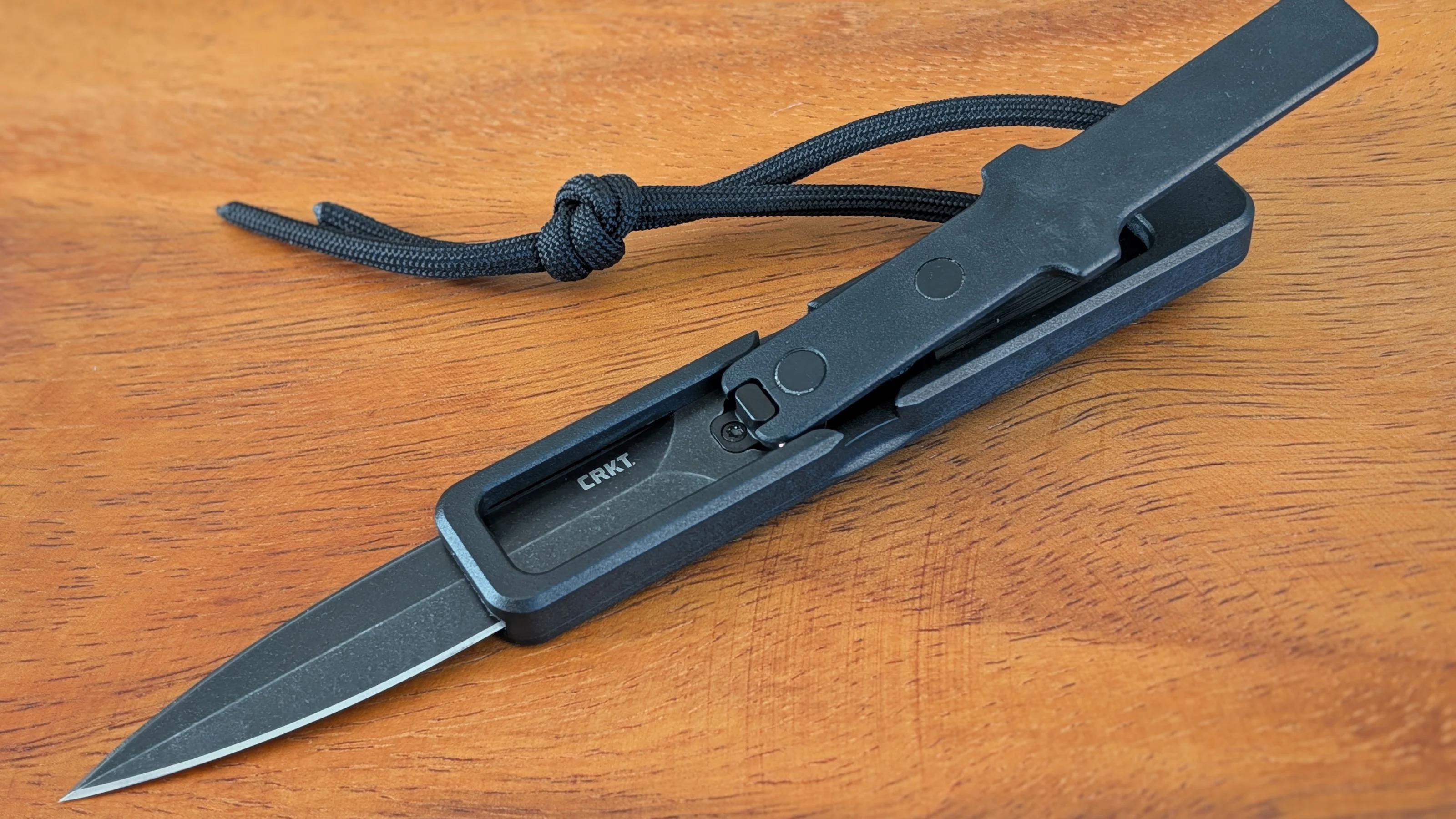
Finally, his design needed a name befitting its newfound fast, fluid, swinging motion. Something that highlighted the mesmerizing way the bar flips around. Something that echoed the way the knife’s quick deployment seemed to both harness and defy gravity. Meet the Gravitic Flip™.
With a lightweight, sturdy glass-reinforced nylon handle, and a blackened, stonewashed high-carbon stainless steel blade, the Gravitic Flip™ pays homage to its predecessor, but elevates it to an experience that is totally new. It retains the elegant simplicity and solid, foolproof safety baked into the original design, but adds a fast, fidgety deployment and a modern, functional blade built to last.
At long last, this brilliant design has the incarnation it always deserved: the Gravitic Flip™.
Kevin Wells
Kevin Wells is the creator of Knife Nerdery, a YouTube channel driven by a simple question: how does that work? With an eye for engineering and design, he takes a close look at the mechanisms that make knives distinctive. Kevin also brings a deep knowledge of knife history to his videos, connecting today’s designs to the ideas and makers that came before them